How It All Began
When people ask me how I started collecting art, they usually expect a grand story. The truth is much simpler—and perhaps that’s exactly why it matters.
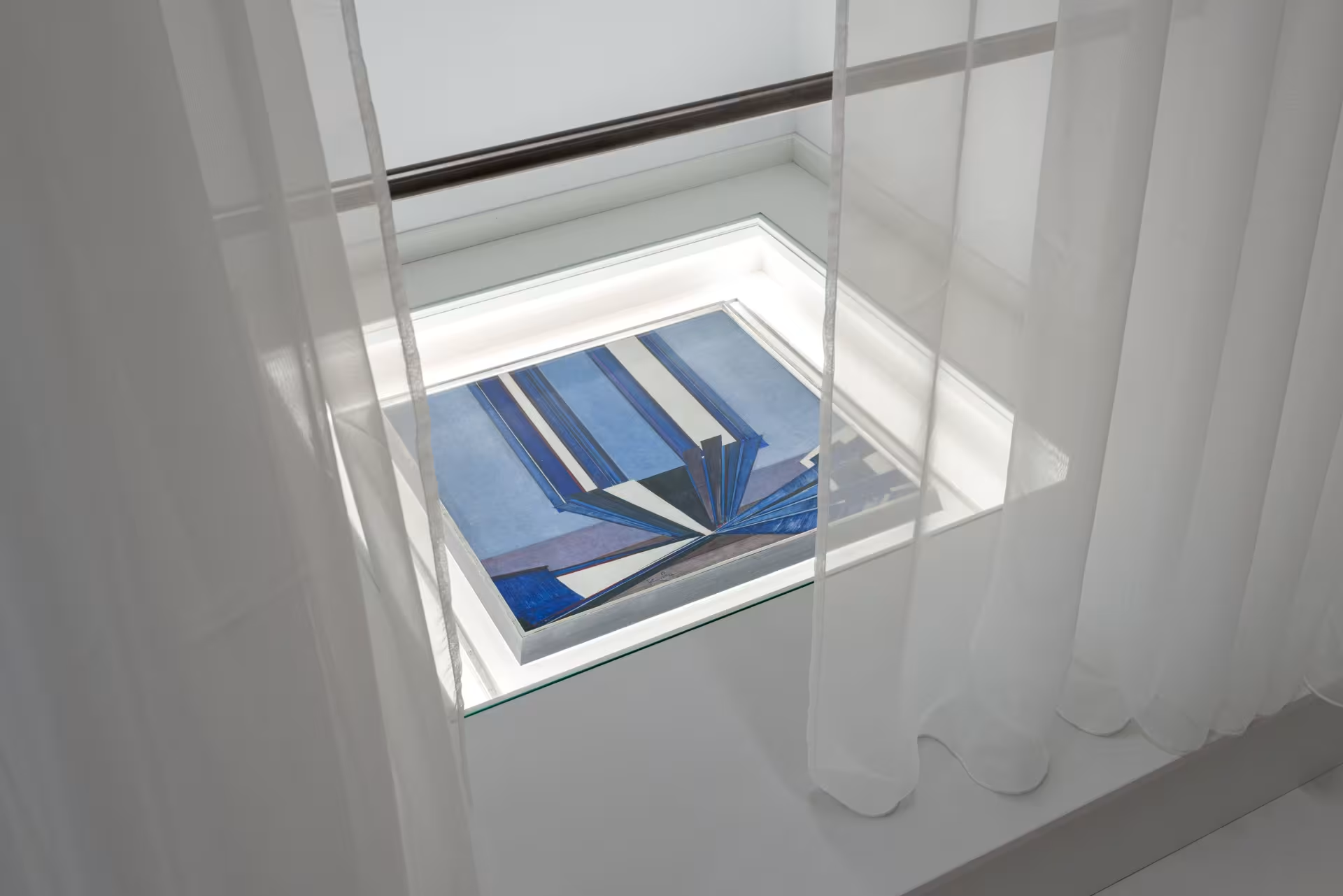
There was no big vision at the beginning, no ambition to become a collector. It started with a house renovation. We were finishing our home, and the architect suggested that the space would benefit from having a piece of art. Up until that point, my relationship with visual art had been fairly neutral. I wasn’t a collector, nor an expert. I was simply someone furnishing a house.
So we went to an auction. That’s where I bought my first two pieces—a sculpture and a painting. At the time, I didn’t see it as the beginning of a collection. It was more of a practical decision: putting something somewhere. Looking back now, I realize that was the moment everything started.
What mattered wasn’t the purchase itself, but what followed. Suddenly, I found myself curious. I wanted to know who created the work, why they created it, and what they meant by it. More importantly, I became interested in the people around art—artists, curators, gallerists. A whole new world gradually opened up to me.
For me, collecting has never been just about objects. It has always been about relationships and stories. When I hold a piece today, I often know exactly what phase of life the artist was in when they created it, what they were going through, and what mattered to them at that moment. That’s what transforms an “object” into something alive.
Over time, spontaneous purchases turned into a more deliberate practice. I began to think about what I actually wanted to collect, and what purpose my collection should serve. I realized I was most drawn to contemporary art—something alive, current, often unfinished and searching. Art that is being created here and now.
With that came a sense of responsibility. When you collect works by living artists, it’s not just about you. In a way, you become part of their journey. You help them continue their work. You give them trust. And that carries a certain obligation.
I won’t pretend otherwise—there is always an element of ego in collecting. The desire to own something unique, to be the one who “discovered” it. But if that’s where it ends, it’s not enough. Over time, I began to think in a broader context. What will remain after me? What value does a collection have for others?
Today, I see collecting art not just as a private pursuit, but as a form of service—to culture, to society, to the future. If you build a meaningful collection, it should eventually transcend you.
Looking back, it all started very innocently. One decision made during a house renovation. But perhaps that’s the most interesting part—big things rarely begin with big plans. They begin with curiosity.
And if you follow that curiosity long enough, it can take you much further than you ever expected.